Succession Crisis Solved:
Preparing Gen Z to Take the Lead
SimuPro helped a leading engineering and innovation firm bridge a 35-year leadership gap through a tailored ten-module simulation program designed for succession planning in a EUR 63 million business with more than 280 employees across the DACH region.
Customer Pain Points
The client is a leading engineering and innovation firm with a strong legacy. However, a major demographic shift created a deep divide between long-standing leaders and ambitious younger talent, putting long-term leadership stability at risk.
Generational Clash
A significant age gap of 23 to 58 created friction between the experience of long-standing leaders and the ambition of emerging talent.
Hidden Complexity
Emerging high-potential leaders underestimated the complexity of managing both office planning and on-site operations.
Client Goal
Bring experienced and emerging leaders together as one high-performing team while making the complexity of leadership tangible.
The Solution
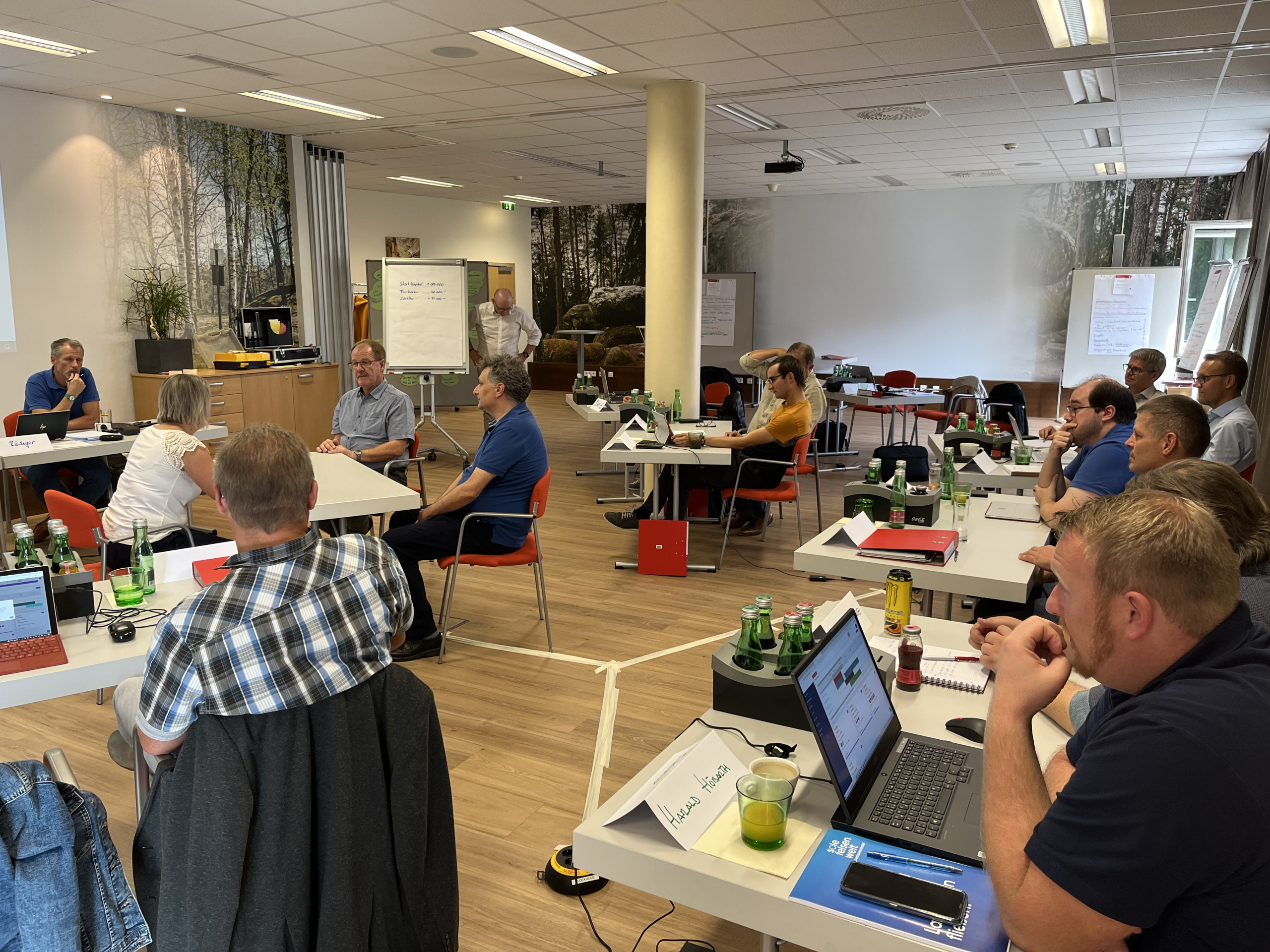
In close partnership with HR, SimuPro designed a comprehensive ten-module leadership program. It was structured to bridge the gap between theory and practice over time, enabling the 29 participants to grow together and apply new insights step by step.
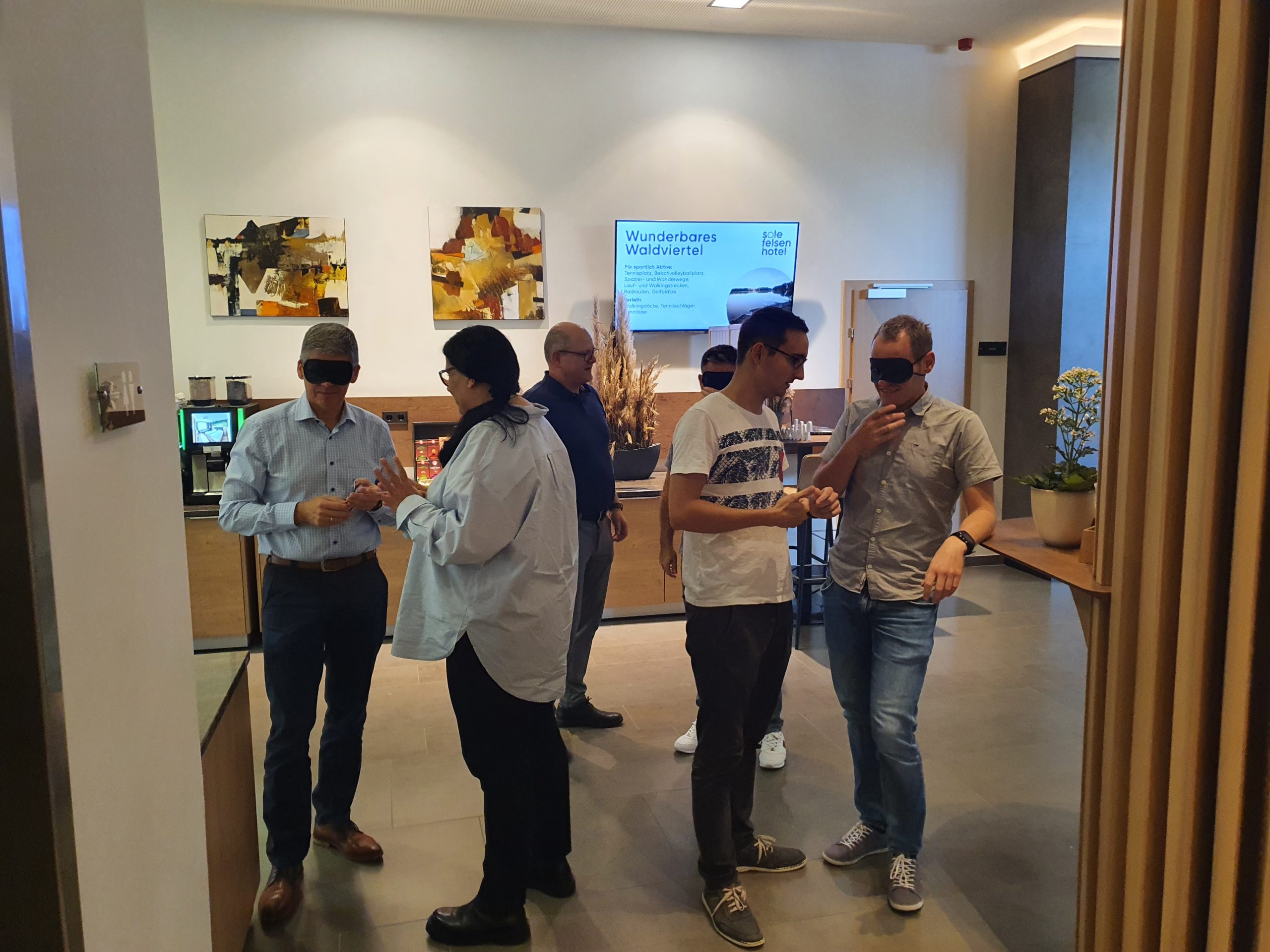
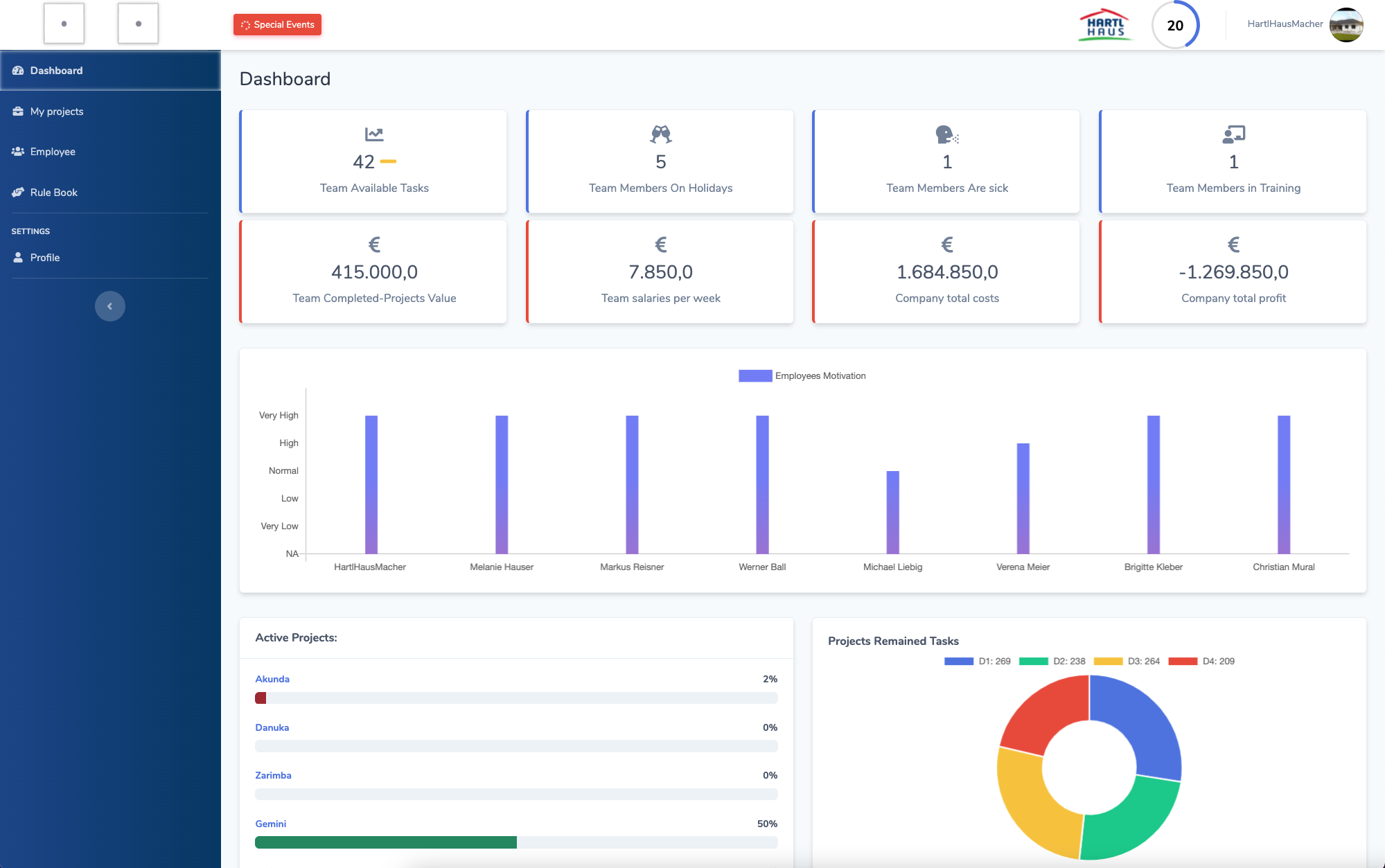
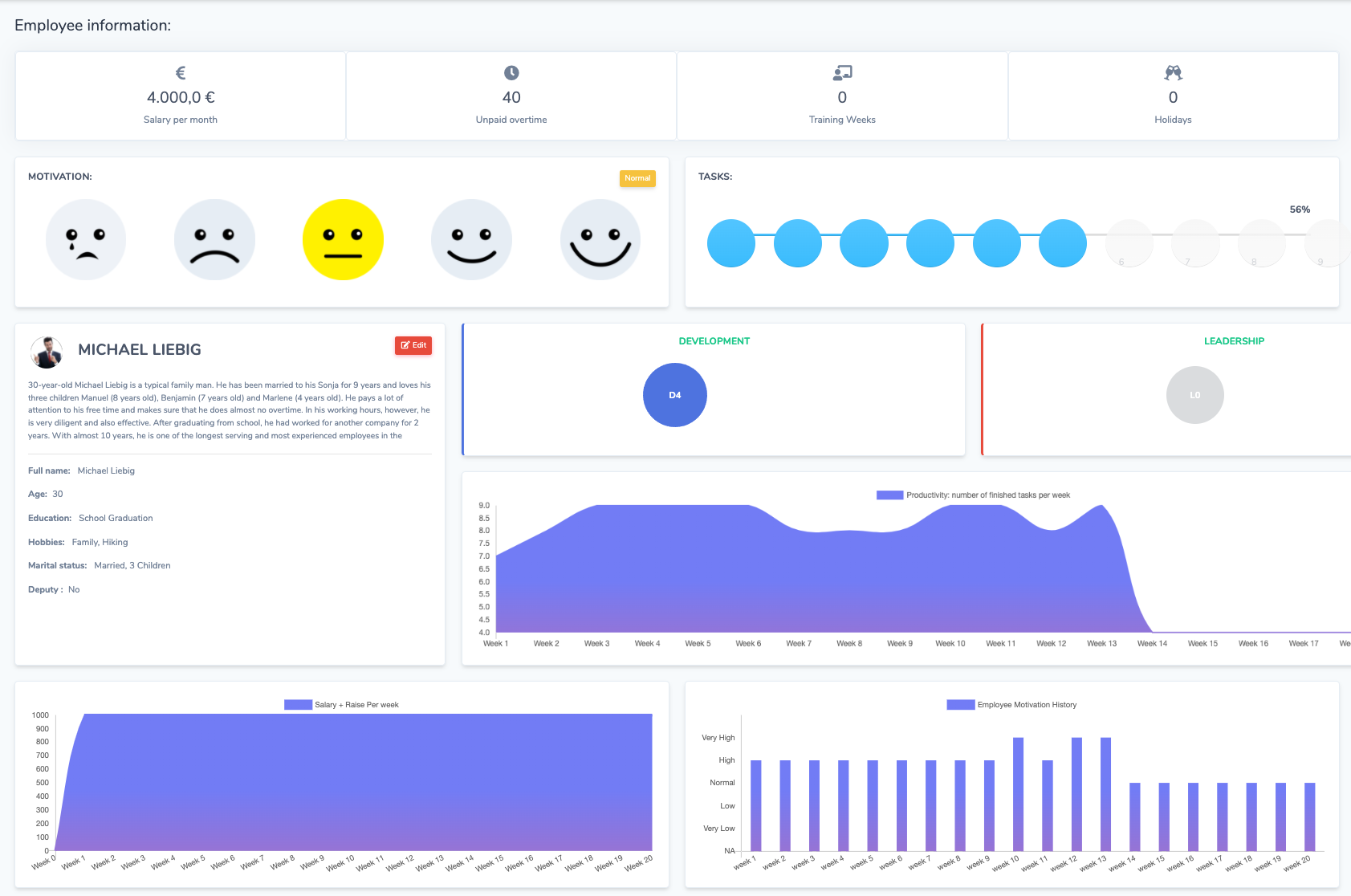
The simulation highlight: This learning journey also included an intensive two-day simulation. Working in pairs, participants led ten virtual department teams and navigated a range of real-world challenges, from delegation and employee conversations to production bottlenecks. Within this protected learning environment, they could test the principles from all ten modules without putting live company projects at risk.
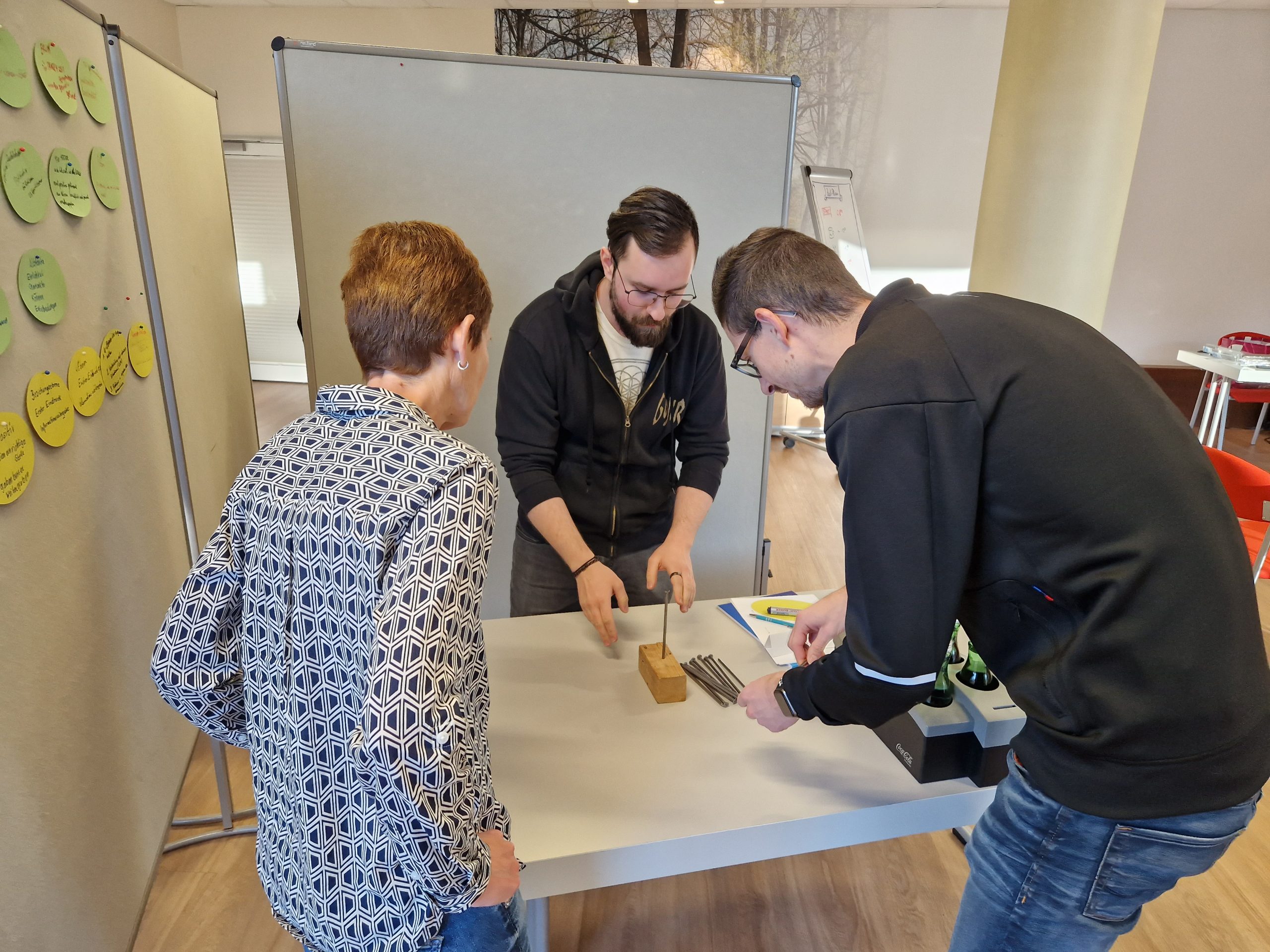
This tandem format fostered direct exchange: younger high-potential leaders developed strategic decision-making, while experienced leaders gained first-hand exposure to the complexity of modern management.
"The two-day simulation delivered intensive, hands-on learning in a safe environment. It was the moment when the theory from the ten modules became tangible and immediately applicable for the emerging leaders."
Additional simulator preparations:
Curriculum Alignment
Aligning scenarios with the ten-module curriculum.
Paired Leadership
Configuring the simulator for paired leadership teams.
Complex Scenarios
Designing scenarios around delegation and conflict management.
Long-term Progress Tracking
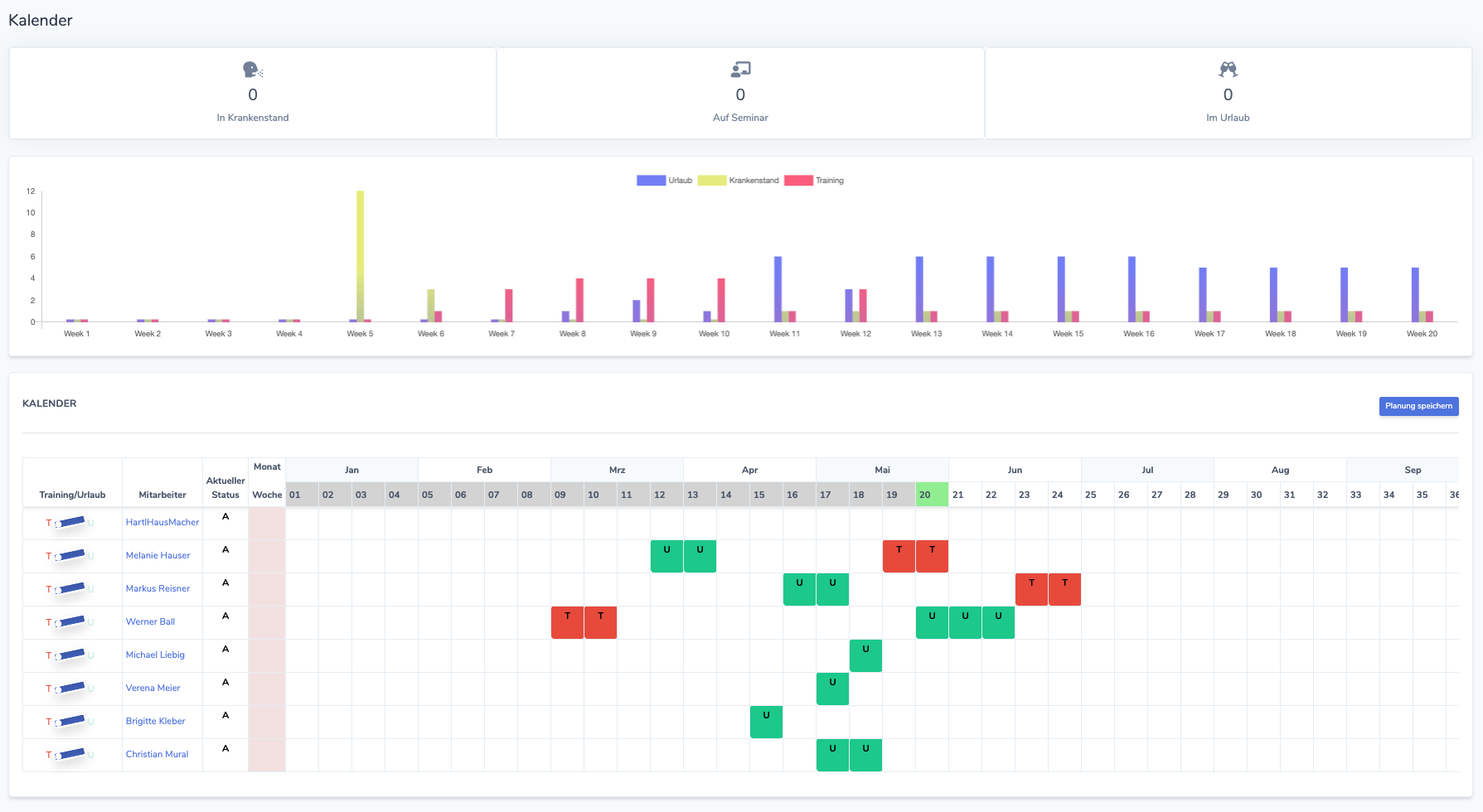
Tracking behavioral patterns throughout the program.
The Implementation
The participants: A demanding cohort of 29 leaders aged 23 to 58, requiring a bridge between digital fluency and decades of experience.
Virtual kick-off (90 min): A critical step to familiarize the older generation with the interface and the younger generation with the complexity of the business context before launch.
Key Simulation Goals
Managing Bottlenecks
Handling sudden production stops and resource shortages under time pressure.
Succession Planning
Identifying and developing potential successors within the simulated teams.
Complex Delegation
Learning to delegate tasks effectively between office staff and on-site workers.
"The simulation created genuine peer-level dialogue. The 23-year-olds brought digital fluency, while the 58-year-olds contributed hard-won experience. For the first time, both sides truly listened to one another."
This created a safe environment in which young leaders could accumulate the equivalent of years of practical experience within just a few days.
The Impact
(Validated by 29 participants)
- 100% of mixed-age pairs successfully resolved the crisis scenarios, proving that diversity leads to better decisions.
- 95% of junior leaders reported significantly higher confidence in managing older team members after the simulation.
- Visible Knowledge Transfer: Experienced employees adopted digital tools more quickly, while younger employees made decisions with greater composure and clarity.
- 100% rated the tandem model as the most effective learning method compared with traditional seminars.
Future-Proofing the Leadership Pipeline: The program proved so effective in developing emerging leaders that HR decided to institutionalize it for the long term.
-
Mandatory Development Step: The SimuPro Academy is now a required development step for every high-potential employee before promotion.
-
Stronger Retention: Turnover among young engineers declined because they felt invested in and trusted.
-
Cultural Shift: The "us versus them" mindset gave way to a culture that deliberately combines digital capability with experience.