Succession Crisis Solved:
Preparing Gen Z to Take the Lead
"How an Engineering firm united a team ranging from 23 to 58 years old to secure its future legacy."
The company:
Customer Pain Points
The client is a leading Engineering & Innovation firm with a rich history. However, a massive demographic shift created a deep divide between the experienced “Old Guard” and the ambitious young talent, threatening future leadership stability.
Generational Clash
A massive age gap (23-58) created friction between "Old Guard" experience and "Young Blood" ambition.
Hidden Complexity
Young high-potentials underestimated the complexity of managing both office planning and on-site reality.
Client Goal
Unite experienced and young leaders into one cohesive team and make leadership complexity tangible.
The Solution
In close collaboration with HR, SimuPro designed a comprehensive ten-module leadership program. It was structured to bridge the gap between theory and practice over a long period, allowing the 29 participants to grow together and apply learnings progressively.
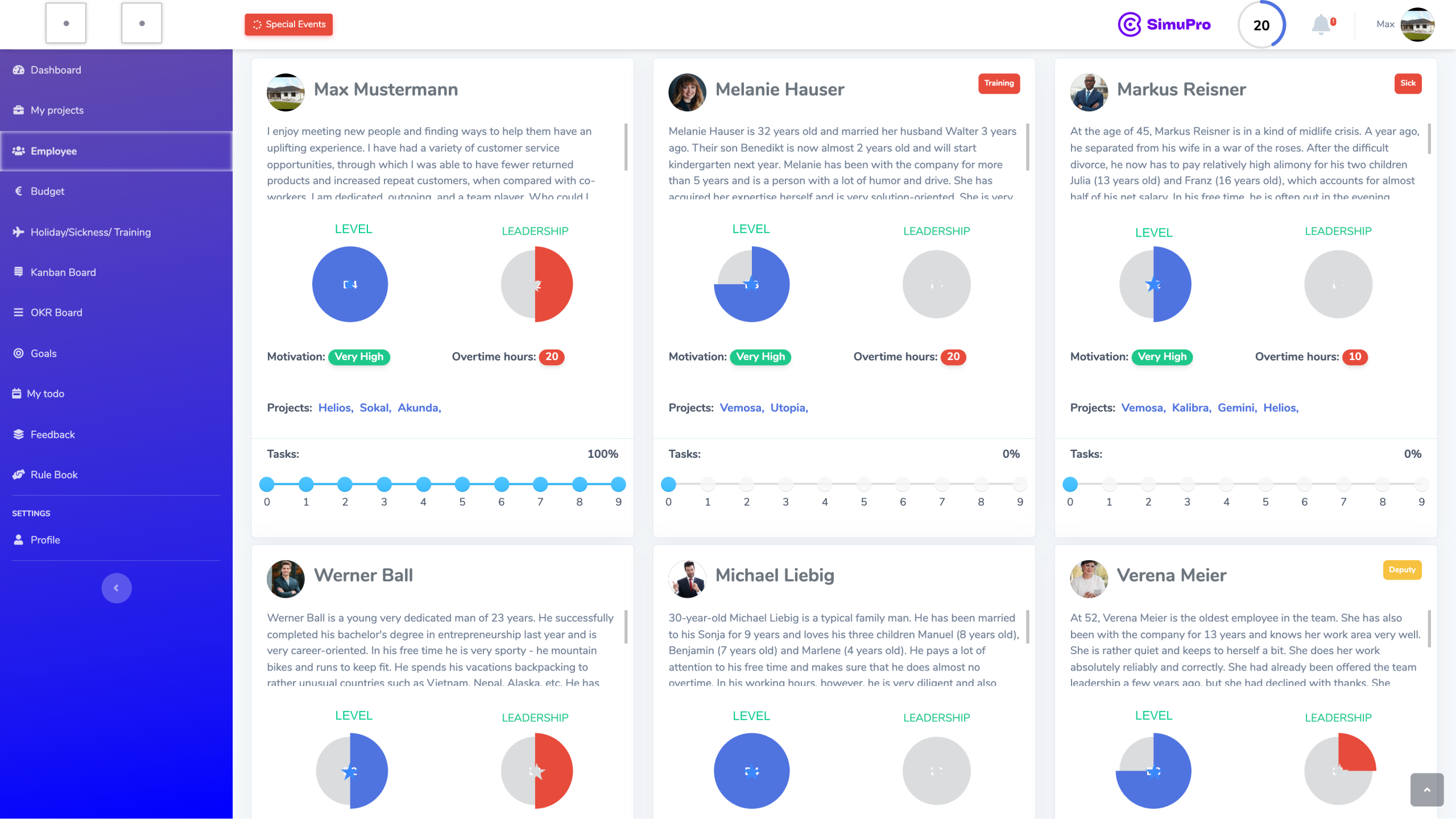
The Simulation Highlight: Integrated into this journey was a two-day intensive simulation. Working in pairs, participants led ten virtual department teams, tackling diverse real-world challenges—from delegation and employee discussions to managing production bottlenecks. This “Safe Zone” allowed them to test the 10 modules’ theory without risking actual company projects.
This paired setup forced a direct exchange: young high-potentials learned strategic decision-making, while veterans experienced the complexity of modern management firsthand.
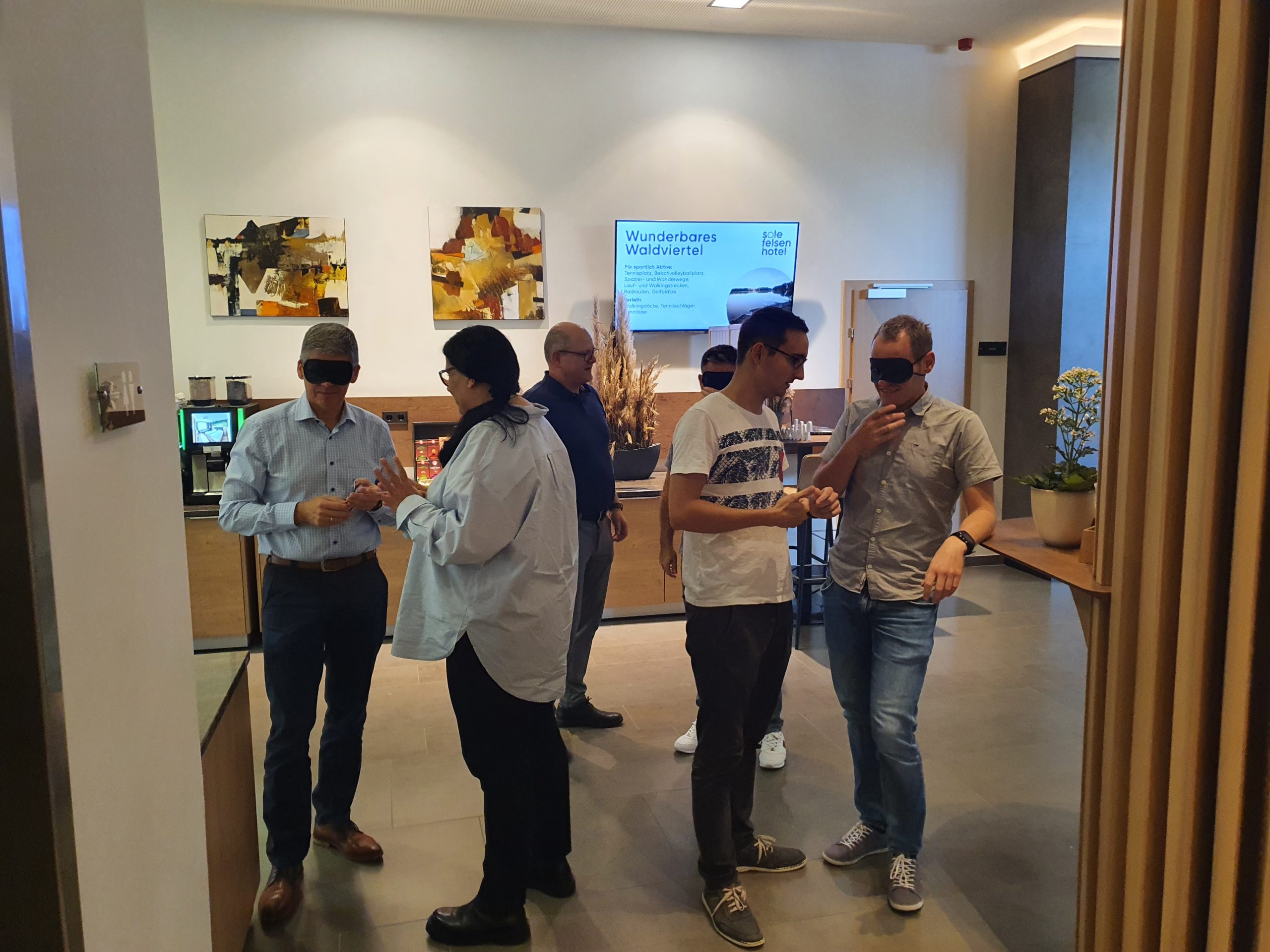
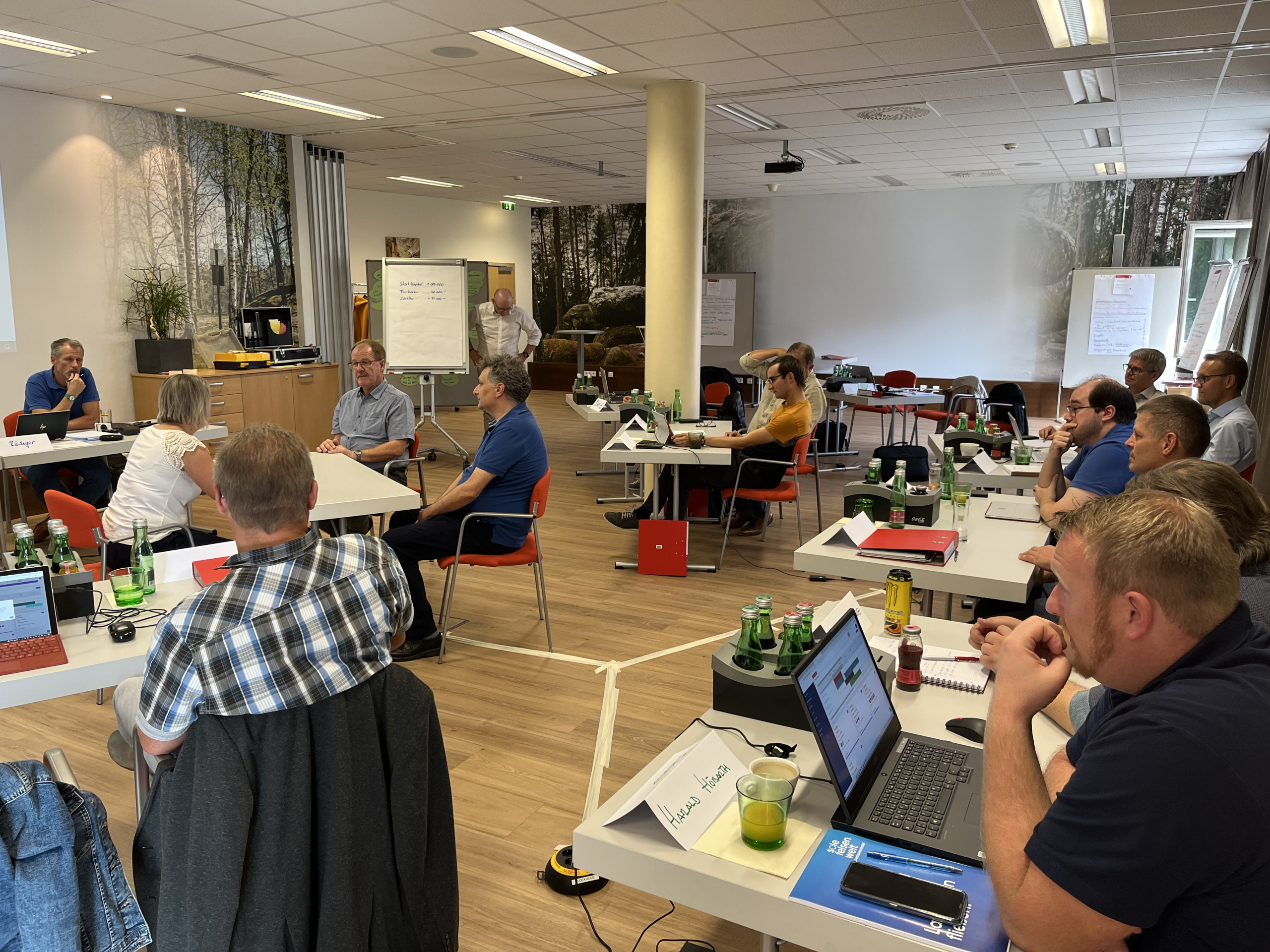
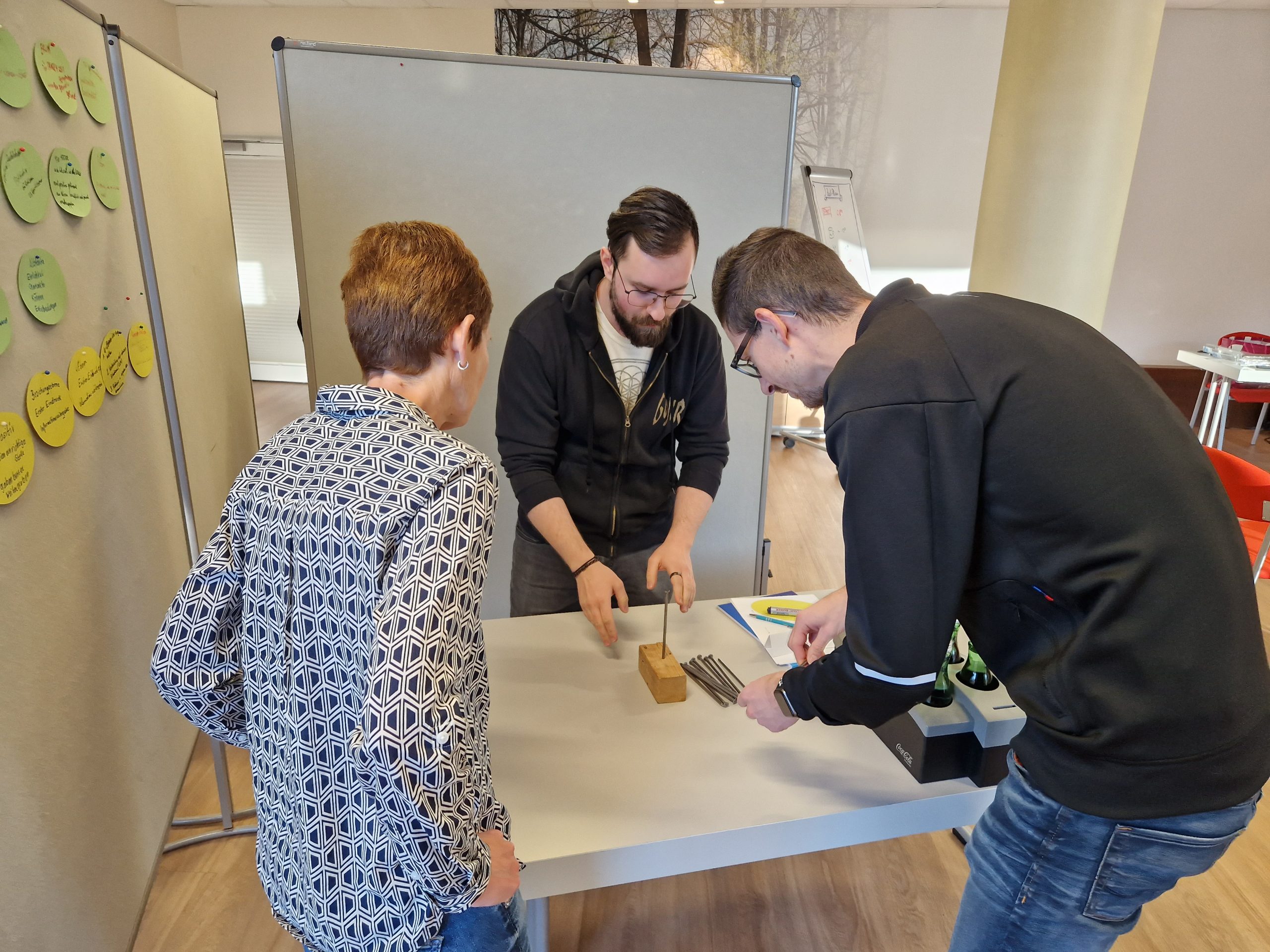
"The two-day simulation provided intense, hands-on learning experiences in a safe environment. It was the place where the theory from the 10 modules finally clicked into reality for the young leaders."
Other simulator preparations:
Curriculum Alignment
Syncing scenarios with the 10-module theory.
Paired Leadership
Setting up the simulator for paired teams.
Complex Scenarios
Scripting events for delegation and conflict.
Long-term Tracking
Tracking behavior across the full program.
The Implementation
The participants: A challenging mix of 29 leaders aged 23 to 58, requiring a bridge between digital natives and experienced veterans.
Virtual Kick-off (90 mins): Essential to familiarize the older generation with the interface and the younger generation with the complex business context before starting.
Key Simulation Goals
Managing Bottlenecks
Handling sudden production stops and resource shortages under time pressure.
Succession Planning
Identifying and developing potential successors within the simulated teams.
Complex Delegation
Learning to delegate tasks effectively between office staff and on-site workers.
"The simulation leveled the playing field. The 23-year-olds mastered the digital tools, while the 58-year-olds shared their wisdom. They finally started listening to each other."
This created a safe environment where young leaders could gain years of “Virtual experience” in just a few days.
The Impact
(Validation from 29 participants)
- 100% of mixed-age pairs successfully resolved the crisis scenarios, proving that diversity leads to better decisions.
- 95% of junior leaders reported significantly higher confidence in managing older team members after the simulation.
- Visible Knowledge Transfer: Seniors adopted digital tools faster, while juniors applied strategic patience learned from veterans.
- 100% rated the "Tandem Setup" as the most effective learning method compared to traditional lectures.
Future-Proofing the Leadership Pipeline: The program was so successful in maturing the young leaders that HR decided to institutionalize it immediately.
-
Mandatory Step: The SimuPro Academy is now a mandatory requirement for any "High Potential" before promotion.
-
Retention Boost: The turnover rate among young engineers dropped, as they felt invested in and trusted.
-
Cultural Shift: The "Us vs. Them" mentality disappeared, replaced by a culture of "Digital Skills + Experience."